The red Tillandsia Capitata Peach originally grows in areas of Mexico, Honduras, Cuba and the Dominican Republic. This air plant is one of the most drought tolerant species in our assortment.
The thick, red/silver leaves of the Tillandsia Capitata Peach are similar in color to reddish peaches when they are in the flowering stage. Before this stage, the air plant's leaves are more green instead of red.
The plant can almost always have small imperfections on the leaves, even when they have just left the warehouses of our producers. This could also happen to the leaves that the plant will generate in the future.
The photo is for illustrative purposes only.
| Image | Combination name | Price | Add to cart |
|---|---|---|---|
Tillandsia is a plant of the Bromeliaceae family, they are an extremely vast genus of plants that includes epiphytic species, but also lithophytic and terrestrial; there are over 700 species that, in turn, branch out into 6 other subgenera of monocotyledonous angiosperm plants.
Tillandsias are perennial herbaceous plants and originate from the American continent and live well outdoors, especially if hung in the shade of a tree or tied to a piece of bark in a position protected from the sun during the hottest hours.
The support on which they are placed is indifferent. It could be a stone, a dry branch, an object made of glass, resin, ceramic or any other material.
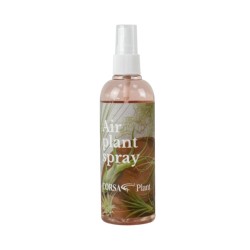
To take care of your tillandsias we recommend the healing spray that also acts as a fertilizer!
Nutrition: Tillandsias do not derive nourishment from the roots, but from the leaves. The roots, although present, perform no other function than that of support. Without underground roots, they absorb their nourishment from the humidity of the air, captured through special structures placed on the epidermis called trichomes which are open when the plant is dry and close again above a certain humidity threshold to prevent evaporation, the velvety appearance of some of these plants is due precisely to them.
Climate: they adapt well to any type of climate because the leaves are able to retain humidity, a very useful feature for surviving dry and arid climates.
Environment: As already mentioned, tillandsia leaves absorb moisture, which makes them able to withstand high temperatures well. However, this incredible plant also tolerates temperatures close to zero, although for optimal cultivation, the temperature should remain mild or in any case, being epiphytic plants that come from tropical/subtropical areas, the minimum temperatures should not fall below 8-10°C . There are also Tillandsias that tolerate some short excursions below zero, including Tillandsia aeranthos.
Light: Sunlight will be essential for the growth of this plant and to ensure magnificent flowering. If grown indoors, it is best to place it behind a window in an area of the house where it can get as much daylight as possible. If grown outdoors, yes to very bright places, but avoid direct light. Placing it on a branch or trunk will give it the opportunity to attach itself to another plant and enjoy a semi-shaded area.
Soil: The air plant, as its name suggests, does not need soil
When and how to water: If grown outdoors, tillandsia absorbs nighttime humidity and rainwater, so unless it is located in an area with a particularly arid and dry climate, it will need very little irrigation. If grown indoors, during the cold seasons the tillandsia must be watered regularly, while in the hot months it must be watered frequently by spraying the leaves. The best way to water Tillandsias is by immersion, placing the plants under water in a basin for a few minutes. This operation must be performed every 10-15 days, typically 2-3 times a month, both during the winter and summer seasons. Tillandsia can also be wet under sink water, in this case care must be taken to wet all parts of the plant that are affected by the whitish bloom. The best time to wet them is in the morning, so as to allow them to dry. quickly.
Fertilizer: Spray
You might also like

The red Tillandsia Capitata Peach originally grows in areas of Mexico, Honduras, Cuba and the Dominican Republic. This air plant is one of the most drought tolerant species in our assortment.
The thick, red/silver leaves of the Tillandsia Capitata Peach are similar in color to reddish peaches when they are in the flowering stage. Before this stage, the air plant's leaves are more green instead of red.
The plant can almost always have small imperfections on the leaves, even when they have just left the warehouses of our producers. This could also happen to the leaves that the plant will generate in the future.
The photo is for illustrative purposes only.