- -€7.50
Orders containing live food and other arthropods are shipped within Italy only on Mondays, Tuesdays, and Wednesdays each week. Please read the Shipping and Delivery terms carefully before placing your order. On-site pickup is always available: order online and come visit us at our warehouses in Cerea (VR).


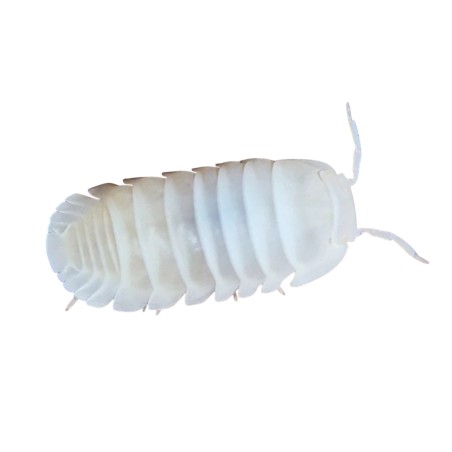
Starter colony of 10 specimens of mixed sizes: Cubaris sp Murina Glacier land isopods.
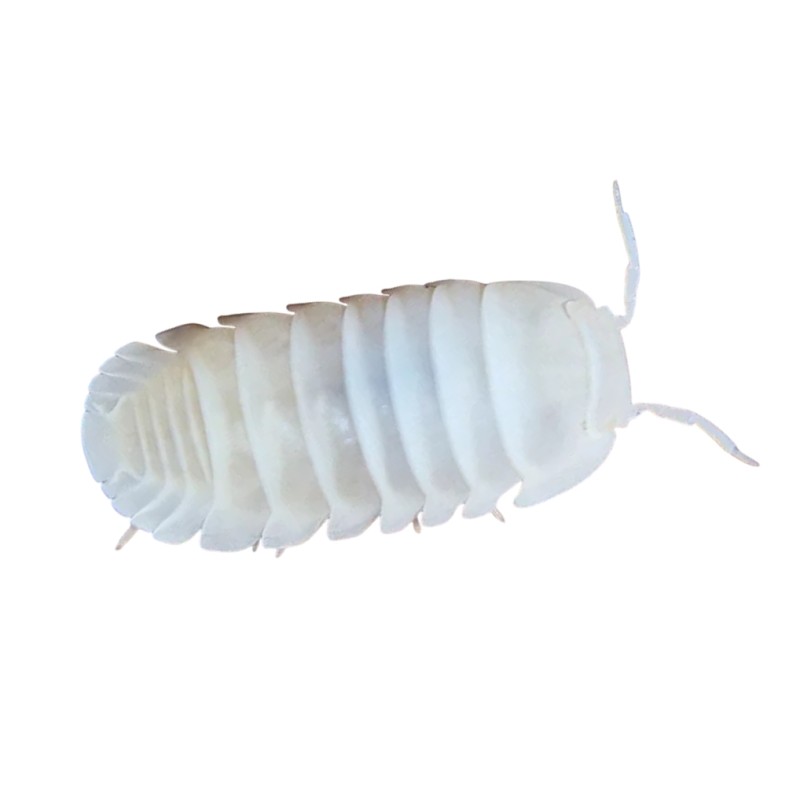
Murina Glacier are one of the many varieties of the Cubaris land crustacean species. They are called glaciers because their purely white and translucent coloration recalls a glacier. The specimens can grow up to 1.4 cm in a development period that varies between 10 and 11 months.
Among the Cubaris it is a species of relative ease to manage, if its needs are respected. (Difficulty 2/5).
• Customers are advised that the purchased pieces may be grouped in one package in order to optimize space. Orders with isopods are shipped ONLY on Monday, Tuesday and Wednesday.•
ATTENTION: upon receipt of shipments, place the packages containing isopods in a medium temperature environment for at least an hour (20/22°C) before opening them, so that they adapt to the climate difference. Below or above these temperatures, the isopods will appear to be less reactive, give them time to adapt before decanting them.
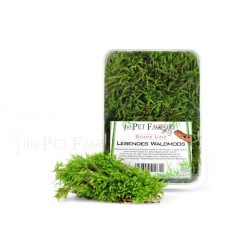
In nature they live on the ground of woods and forests, hidden among trunks and rocks. In your bioactive terrariums you should try to recreate this habitat. The substrate should be created with a mixture of leaves, soil and rotten wood to provide basic food. A layer of moss and sphagnum, pieces of bark and other leaves should be placed on the substrate, so that on one side the animals can find shelter and on the other the substrate does not dry out too quickly.
Food: fruit, vegetables, flowers, mushrooms, molds, Collembolafix Springtail Feed, Various leaves;
Temperature: They need slightly higher temperatures than the others, reaching their most active at 28°C.
Humidity: They love a humid environment, a humidity between 70 and 80% should be maintained;
You can safely keep them together with snails and slugs, millipedes, phasmids, beetles, etc. If instead you decide to include them as detritivores for cleaning your terrarium with reptiles and amphibians you must take into account that they could become a succulent snack rich in calcium and chitin;
The isopods decompose the organic waste material of your animals inside the terrarium, keeping it always clean, also creating high-quality humus for your plants. Being detritivores they do NOT feed on live plants, so there is no problem that they can eat healthy plants in your habitat.

Data sheet
You might also like
Starter colony of 10 specimens of mixed sizes: Cubaris sp Murina Glacier land isopods.
Murina Glacier are one of the many varieties of the Cubaris land crustacean species. They are called glaciers because their purely white and translucent coloration recalls a glacier. The specimens can grow up to 1.4 cm in a development period that varies between 10 and 11 months.
Among the Cubaris it is a species of relative ease to manage, if its needs are respected. (Difficulty 2/5).
• Customers are advised that the purchased pieces may be grouped in one package in order to optimize space. Orders with isopods are shipped ONLY on Monday, Tuesday and Wednesday.•
ATTENTION: upon receipt of shipments, place the packages containing isopods in a medium temperature environment for at least an hour (20/22°C) before opening them, so that they adapt to the climate difference. Below or above these temperatures, the isopods will appear to be less reactive, give them time to adapt before decanting them.