Orders containing live food and other arthropods are shipped within Italy only on Mondays, Tuesdays, and Wednesdays each week. Please read the Shipping and Delivery terms carefully before placing your order. On-site pickup is always available: order online and come visit us at our warehouses in Cerea (VR).


Greater wax moth or honeycomb moth, honey worms, Galleria mellonella, are one of the most popular snacks for captive breeding of reptiles and amphibians.
Do not feed them as a staple diet; overfeeding can lead to weight gain or nutritional imbalances, especially if the diet is not varied. Therefore, mealworms should be used as a complementary food, never as a sole staple. Consider them a delicious snack for your exotic pet!
| Combination name | Price | Add to cart |
|---|---|---|
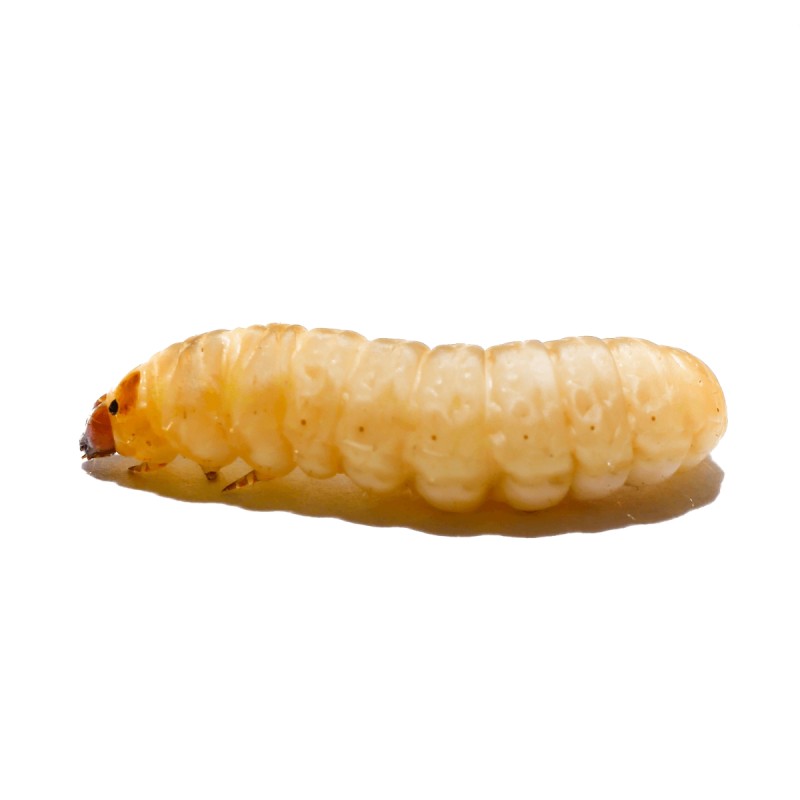
Greater wax moth or honeycomb moth is the larva of the wax moth, an insect that naturally lives in hives, feeding on wax, honey residue, and pollen. Its body is fleshy, light in color, with a brownish head, and can reach 2.5-3 cm in length in the larval stage. The main reason mealworms are so frequently used in terrariums is their composition: they are very rich in fat, a characteristic that makes them particularly useful in certain contexts:
- Weak or convalescing animals, which require easily assimilated energy;
- Species in the shriveling phase (hibernation or semi-hibernation), when energy levels are at a minimum;
- Growing individuals, but only if balanced with other foods with a higher protein content.
Conservation:
One of the most appreciated features by breeders and enthusiasts is their ease of preservation. Mealworms can be kept alive in the refrigerator (between 5 and 10°C), where they slow down their metabolism without dying. Alternatively, they develop more rapidly at room temperature, eventually pupating and transforming into moths.
Although very common in the reptile and amphibian world, mealworms are also used in other contexts:
- Ornithology: Insectivorous birds are fond of them, especially during the breeding season and raising chicks.
- Sport fishing: They are a very effective natural bait for trout, carp, chub, and perch.
- Domestic anthills: Some ant species appreciate their innards, which are used as a protein source.
Specific References
You might also like
Greater wax moth or honeycomb moth, honey worms, Galleria mellonella, are one of the most popular snacks for captive breeding of reptiles and amphibians.
Do not feed them as a staple diet; overfeeding can lead to weight gain or nutritional imbalances, especially if the diet is not varied. Therefore, mealworms should be used as a complementary food, never as a sole staple. Consider them a delicious snack for your exotic pet!